

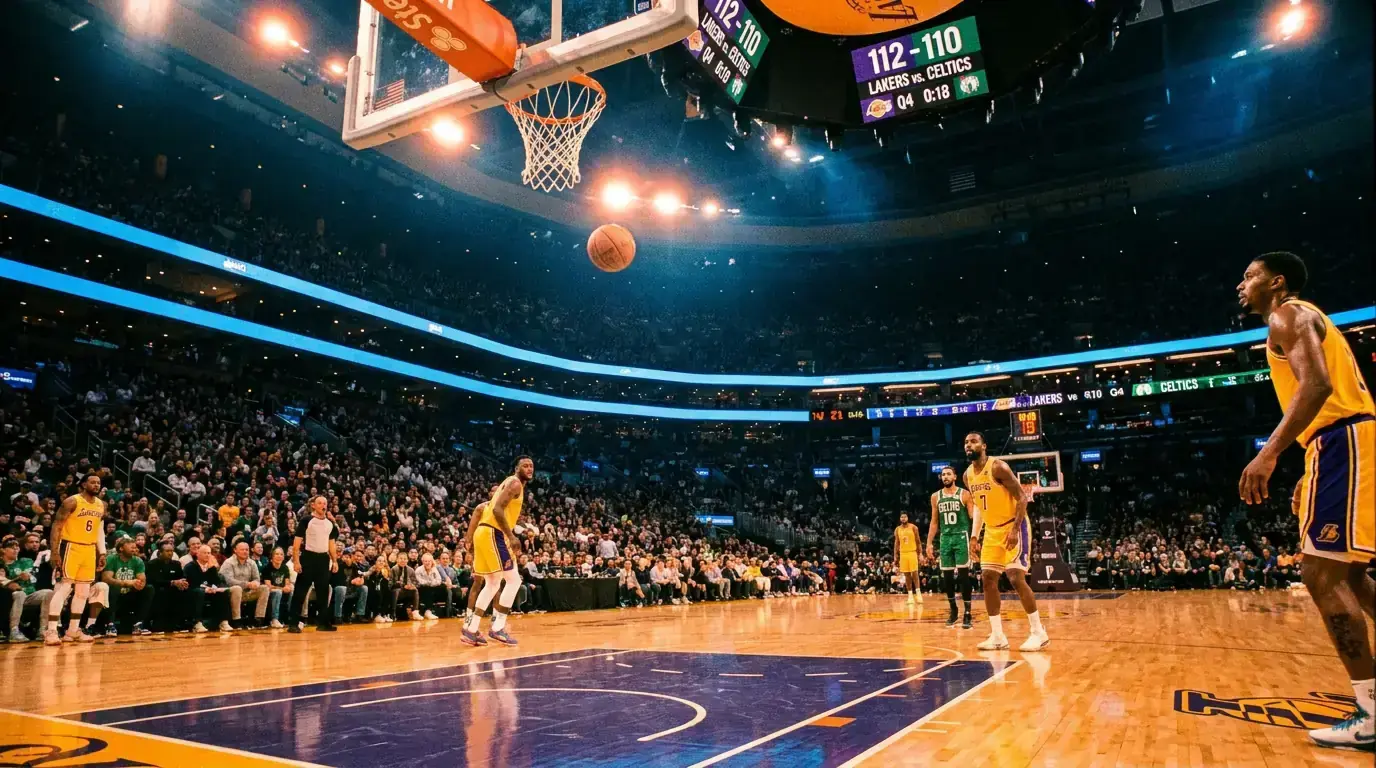
I lost my first seven NBA spread bets in a row. Every single one. Looking back nine years later, the reason was obvious: I treated spreads like moneyline bets with extra steps. I picked who I thought would win and ticked the box next to their name, completely ignoring what the number beside it actually meant. That expensive week taught me that NBA point spread betting operates on entirely different logic – and once I understood that logic, everything changed.
The spread exists because bookmakers know something casual bettors often miss: in most NBA games, one team is clearly better than the other. Without the spread, everyone would simply bet the favourite and the sportsbook would collapse. The handicap – that -4.5 or +7 you see next to team names – levels the playing field artificially. It transforms a predictable mismatch into a genuine 50/50 proposition, at least in theory.
For UK punters accustomed to football’s moneyline-heavy culture, NBA spreads feel foreign at first. But basketball’s high-scoring nature makes spreads not just practical but essential. A football match ending 1-0 happens regularly; an NBA game finishing 110-85 is just as common. That 25-point margin would obliterate moneyline value for the underdog, but a spread of +8.5 might still give you something to work with. Over my years analysing NBA betting markets, I have found that spreads consistently offer the most value for punters willing to put in the work. This guide walks through everything I have learned about making that work pay off.
Calculating NBA Point Spread Payouts
Picture this scenario. The Lakers are hosting the Hornets tonight. The Lakers are the better team – they have more talent, they are playing at home, and they have been in good form. If I offered you even money on either team winning outright, you would pick the Lakers every time, and so would everyone else. The spread fixes this imbalance.
Bookmakers might set this game at Lakers -6.5 / Hornets +6.5. That minus sign next to the Lakers means they need to win by more than 6.5 points for a spread bet on them to pay out. The plus sign next to the Hornets means they can lose by up to 6 points and still cover the spread. If the final score is Lakers 112, Hornets 108, the Lakers won the game but lost the spread – their 4-point victory did not exceed the 6.5-point handicap. Your bet on Hornets +6.5 would win.
The terminology here matters. When a team beats the spread, we say they covered. When they fail to beat the spread despite winning the game, they failed to cover. You will hear bettors talking about teams going ATS – against the spread – which refers to their historical record of covering rather than winning outright. A team could have a terrible record but be profitable ATS if they consistently keep games closer than expected.
Here is the mechanic broken down with numbers. Team A is -5.5 at odds of 1.91. Team B is +5.5 at odds of 1.91. You bet £100 on Team A -5.5. If Team A wins 115-105 (a 10-point margin), they covered the 5.5-point spread, and you win £91. If Team A wins 108-104 (a 4-point margin), they failed to cover, and you lose your £100. The game outcome was the same in terms of who won, but the betting outcome was opposite.
This creates a fascinating disconnect between watching games and betting them. I have celebrated losses and mourned victories more times than I can count. A team I backed might be down by 15 with two minutes left, looking hopeless – then hit a few late baskets to cover my +8.5 spread even though they still lost by 6. Conversely, watching your team dominate all game only to allow garbage-time points that blow your cover stings in a particular way.
The number the bookmaker sets comes from a combination of power ratings, recent form, home court calculations, injury reports, and crucially, predictions about where the betting public’s money will flow. Unlike predicting a winner, setting a spread requires anticipating margins – a much more precise science that I will explore throughout this guide.
Reading NBA Spread Lines and Odds
The first time I opened an American sportsbook, I thought my screen had glitched. Warriors -7 (-110) made no sense to me as a British punter raised on decimal odds. Now, after years of switching between UK and international platforms, I can translate between formats without thinking – and understanding both systems gives you a genuine edge when line shopping.
UK bookmakers display NBA spreads with decimal odds. You might see: Celtics -4.5 at 1.91, Bucks +4.5 at 1.91. That 1.91 represents your total return per pound staked – bet £100 and win, you get £191 back (£91 profit plus your original £100 stake). American odds express the same thing differently: -110 means you stake £110 to win £100 profit, equivalent to approximately 1.91 in decimal format.
The difference between those odds and fair value is called the juice or vig. If spreads were truly 50/50 propositions with no house edge, both sides would be offered at 2.00. Instead, the standard 1.91 on each side means the bookmaker collects approximately 4.5% on every bet regardless of outcome. Your job is to find spots where your assessed probability exceeds the implied probability of those odds.
Reading a full spread line at a UK bookmaker typically looks like this: Golden State Warriors at Boston Celtics, Spread: Celtics -6.5 at 1.91, Warriors +6.5 at 1.91. The home team appears second in UK conventions. The Celtics must win by 7 or more; the Warriors can lose by 6 or fewer (or win outright) for their spread to cash. Some bookmakers offer alternative spreads with adjusted odds – buying points for more cushion at worse odds, or selling points for better odds but tighter margins.
Push Results and Half-Point Spreads
A mate of mine once had what he thought was a winning spread bet on the Mavericks at -5. Final score: Mavs 118, Pelicans 113. He celebrated, checked his account, and found his stake simply returned. No profit, no loss. Welcome to the push – and understand why modern spreads mostly avoid them.
A push occurs when the final margin lands exactly on the spread number. The bookmaker returns all stakes to bettors on both sides. From the sportsbook’s perspective, pushes are nuisances that generate no revenue. From your perspective, they are opportunities frozen in time, capital locked up returning zero value.
This is precisely why most NBA spreads include half points. You will see -4.5 rather than -5, making pushes mathematically impossible since no team can win by exactly 4.5 points. The half-point – called the hook in betting circles – eliminates ambiguity. Either the favourite covers or the underdog does.
When you see a whole number spread, the pricing changes to account for push probability. Lakers -6 might be offered at 1.87 on both sides rather than the standard 1.91. The decision to buy points – paying for a more favourable spread – deserves careful thought. Moving from -6.5 to -5.5 might cost you 10 points of odds value. In NBA betting where margins distribute evenly without dominant key numbers, point purchases are generally unwise. Better to take the line as offered or pass entirely.
Home Court Advantage in NBA Spreads
I once watched the Jazz demolish a tired Warriors team by 28 points in Salt Lake City – a team that had beaten those same Jazz by 15 in San Francisco just four days earlier. The venue changed; everything else followed. Understanding home court advantage is not optional in spread betting. It is foundational.
Historically, NBA home teams won around 55-60% of games, translating to roughly 2.5 to 3 points of spread value. Bookmakers build this into their lines automatically – a matchup between equally rated teams would see the home side favoured by around 3 points simply for hosting.
But home advantage varies dramatically by venue. Mile High City basketball in Denver, where altitude genuinely affects visiting players, shows different patterns than sea-level arenas. Teams with famously hostile crowds seem to squeeze extra performance from home players and extra mistakes from visitors.
Travel interacts with home court in ways the raw numbers understate. Research consistently shows that back-to-back games affect team performance by 1 to 3 points on average, with the impact concentrated on the visiting side. When a team is playing their second game in two nights on the road, that fatigue compounds with the standard home court disadvantage.
For practical betting purposes, I look for mismatches between perceived home court advantage and actual conditions. A team with a sellout crowd in a raucous venue should perform closer to historical norms. A team playing on a random Tuesday night with sparse attendance might not get the same boost.
When to Bet Spread vs Moneyline
Two years ago, I had the Grizzlies at +7.5 against the Suns. Memphis played brilliantly, winning outright by 4. My spread cashed easily, paying 1.91 on my stake. A friend had taken the Grizzlies moneyline at 3.20 and celebrated harder. Same game, same correct read, vastly different payouts. That contrast stuck with me and shaped how I now approach market selection.
The spread versus moneyline decision depends entirely on your assessment of win probability versus margin probability. If you believe a team will win but by a small margin, the spread might not work in your favour while the moneyline does. If you believe a team will lose but cover, only the spread offers value. Your job is matching your prediction to the right market.
Let me walk through the mathematics. Suppose the Heat are +6.5 at 1.91 and their moneyline is 3.50. You think Miami has a 40% chance to win outright. Expected value on the moneyline: (0.40 x £250 potential profit) – (0.60 x £100 stake) = £100 – £60 = +£40 expected value per £100 staked. That is solid value. Now suppose you think Miami has a 55% chance to cover +6.5 (either winning or losing by 6 or fewer). Expected value on the spread: (0.55 x £91 potential profit) – (0.45 x £100 stake) = £50 – £45 = +£5 expected value. The spread offers value too, but less than the moneyline in this scenario.
Conversely, imagine you think Miami has only a 25% chance to win outright but a 58% chance to cover +6.5. Moneyline expected value: (0.25 x £250) – (0.75 x £100) = £62.50 – £75 = -£12.50. Negative expected value – do not bet. Spread expected value: (0.58 x £91) – (0.42 x £100) = £52.78 – £42 = +£10.78. The spread is the right choice here.
Heavy favourites present the clearest spread preference. When a team is -350 on the moneyline (implied probability 78%), you risk £350 to win £100. They could win by 1 point and you make that small profit. But if you take them at -8.5 spread for 1.91, you risk £100 to win £91 – your downside is capped while your upside is similar. The problem is that -8.5 is a much higher bar to clear. The trade-off matters.
I use a simple rule: bet moneyline on underdogs when I think they have a genuine chance to win, bet spread when I think the margin will be closer than the market implies regardless of outright winner. Heavy favourites I approach through spreads only – the moneyline rarely offers value worth tying up capital for.
For a more comprehensive view of how this fits into your overall NBA betting approach, see the complete NBA betting guide which covers market selection across all bet types.
Understanding NBA Line Movement
I woke up one morning to see Nuggets -4 on my screen, grabbed a coffee, and returned twenty minutes later to find Nuggets -6. No injury news, no lineup change, nothing in the headlines. Just sharp money moving the market before I could act. Lines move constantly in NBA betting, and knowing why they move – and what to do about it – separates informed bettors from the crowd.
Opening lines appear anywhere from a week to 12 hours before tip-off, depending on the bookmaker. These early numbers are educated guesses based on power ratings, injury reports available at the time, and predictions about how the public will bet. Crucially, opening lines are not predictions of actual margin – they are predictions of where balanced action will land. Bookmakers want equal money on both sides, not to be right about who covers.
Once lines post, money flows in. If 70% of bets come in on the Lakers -5, bookmakers adjust to Lakers -5.5 or -6 to attract action on the other side. This is basic supply and demand. What makes it interesting is distinguishing between sharp money and public money. Professional bettors – the sharps – typically bet early, in large amounts, and on specific numbers that represent genuine value edges. The betting public – recreational punters like most of us – tend to bet closer to game time, in smaller amounts, and heavily on favourites and popular teams.
When a line moves against the apparent public side, pay attention. If the Lakers are -5, public money pours in on the Lakers as expected, but the line moves to Lakers -4.5, that is called reverse line movement. It signals that sharp money on the other side outweighs public volume, and bookmakers trust the sharps more than the masses. This does not guarantee the Laker opponent will cover, but it suggests professional bettors see value there.
Professional handicappers achieve success rates of roughly 47% on spread picks – barely below breakeven and miles better than random chance would predict against the vig. That 47% against 1.91 odds still loses money long-term, which tells you how difficult NBA spread betting actually is. The sharps operating at 52% or 53% are genuinely elite, and their betting action moves markets even when it contradicts public sentiment.
The concept of Closing Line Value – CLV – measures whether you beat the closing number. If you bet Lakers -5 and the line closes at Lakers -6, you captured a point of CLV. Over large samples, consistently beating closing lines correlates strongly with long-term profitability. This is not because closing lines are perfectly predictive, but because they incorporate the most information. If you can get down before that information is priced in, you have an edge.
For practical purposes, this means: watch for line moves early, understand what drives them, and recognise that the number you bet at opening might not exist by tip-off. Whether to bet early or wait for more information depends on your edge. If your edge is in information (injury news, lineup intel), waiting helps. If your edge is in pure modelling, betting early captures better numbers before the market adjusts.
Strategies for NBA Spread Betting
Momentum is not a myth in NBA betting – I have the receipts to prove it. Over years of tracking my own bets, the patterns became impossible to ignore. Teams riding hot streaks cover at rates that exceed random chance, and teams in freefall fail to cover with depressing regularity. The question is how to systematically exploit these patterns.
Research suggests that betting on teams with four or more consecutive wins – or against teams with four or more consecutive losses – has historically shown success rates around 56.5%. That might not sound dramatic, but at standard -110 juice, a 56.5% hit rate generates meaningful profits over volume. The mechanism is partly psychological: winning teams play with confidence, their role players step up, and opponents sometimes enter games with defeated body language. The numbers also reflect regression to the mean lag – markets adjust to hot and cold streaks, but not always fast enough.
Here is a related finding that shapes my approach: each additional win in a team’s last five games increases their victory probability by 2.2 to 4.0 percentage points, controlling for other factors. A team that is 5-0 in their last five enters a game with measurably higher win probability than one that is 3-2 in their last five, even if season-long records are similar. Spreads adjust for this, but not always fully.
Schedule spots create exploitable situations. I mentioned back-to-back fatigue earlier – the 1 to 3 point impact on performance is well documented. But context matters enormously. A back-to-back where both games are at home is less taxing than one with cross-country travel. A back-to-back against two elite teams is different from one against a top team followed by a bottom feeder. I track not just the schedule but the specific circumstances around each game.
Road trips of three games or more create cumulative fatigue that compounds game-to-game. The third road game often shows the biggest drop-off, though this varies by team based on roster depth and travel logistics. West Coast teams heading east for extended trips face time zone issues that East Coast teams travelling west do not experience in the same way.
Situational spots also matter. Teams playing before or after a major rival game sometimes show unfocused performances. Teams with nothing to play for late in the season sometimes rest players without formal injury designations. Playoff positioning games often feature extreme effort from teams fighting for seeding while teams with locked positions coast. These situations are not reflected in power ratings but absolutely affect spread outcomes.
I build my betting week around identifying these schedule and situational factors first, then checking if the spread offers value given my assessment. The numbers come second to the context. A great spread on a bad situational spot is still a bad bet.
Common Mistakes in NBA Spread Betting
The worst stretch of my betting career came not from a bad run of variance but from a cascade of avoidable errors. Down after a losing week, I doubled my unit size to recover faster. The recovery never came. I chased losses with increasingly reckless bets until my bankroll was shredded. It took months to rebuild – and the rebuild started with recognising the mistakes that dug the hole.
Chasing losses is the most destructive behaviour pattern in sports betting. Zoë Osmond from GambleAware put it plainly: there are particular types of gambling that lead to increased chances of experiencing gambling harm, with corrosive effects on lives, finances, careers, and relationships. Spread betting on a nightly sport like basketball offers constant opportunities to chase, which makes discipline not optional but essential. Every night has games. Every game offers another chance to make back yesterday’s losses. Except the maths does not work that way – aggressive position sizing after losses leads to steeper losses, not recovery.
Backing favourites because they are favourites – regardless of the number – burns money slowly but surely. The Lakers might be the better team, but Lakers -11.5 is not automatically a good bet. At that spread, they need to dominate from start to finish with no garbage time points allowed. I have seen brilliant teams fail to cover spreads that seemed modest precisely because the lead was so comfortable that they coasted late while the underdog’s bench scored freely. The spread matters more than the teams involved.
Fan betting – backing your favourite team regardless of analysis – creates a conflict between emotional attachment and clear-eyed assessment. I support a specific club and I do not bet on their games, period. I know I cannot objectively evaluate their chances because I want them to win. I have seen too many punters rationalise bets on their teams with logic that would never apply to neutral games.
Ignoring context is subtler but equally costly. A team’s overall record tells you less than their recent form, injury situation, travel schedule, and motivational context. I once bet heavily on a team with a strong season record, completely missing that their star player was listed as probable but had been visibly hobbled for two weeks. He played limited minutes and they lost by double digits. The information was available; I just did not look for it.
Overreacting to recent results cuts both ways. A team loses by 25 in an embarrassing performance – the instinct is to fade them next game. Sometimes that is correct; sometimes the blowout loss creates urgency and focus that leads to a bounce-back cover. Similarly, a team wins big and looks unstoppable – then flatlines in a classic letdown spot. Recent performance informs analysis but does not dictate it.
Making Smarter Spread Bets
Nine years of NBA spread betting taught me that this market rewards preparation more than intuition. The bettor who tracks schedule spots, monitors line movement, and sizes bets appropriately will outperform the one who picks teams based on gut feel, no matter how deep their basketball knowledge. The spread is not about predicting winners – it is about predicting margins relative to market expectations.
Start with context before touching numbers. Who played last night? Who flies home after this game versus who stays on the road? Which team has playoff implications and which is already eliminated? These situational factors shape performance in ways that power ratings alone cannot capture. Then check the spread – if it does not align with your situational assessment, you may have found value.
Keep records religiously. Note not just which bets won or lost but why you made each pick and whether your reasoning was sound even when the outcome was not. Patterns emerge over time: maybe you consistently underestimate road teams, or you overvalue recent blowout wins. Self-awareness through data is the path to improvement.
And remember that the 4.5% juice means you need to hit roughly 52.4% to break even. That sounds achievable until you realise that professional handicappers with access to sophisticated models and inside information hover around 53-55% over large samples. Be realistic about your edge, size your bets conservatively, and treat this as a long-term pursuit rather than a quick route to profit. The punters who last are the ones who respect both the difficulty and the discipline required.
