

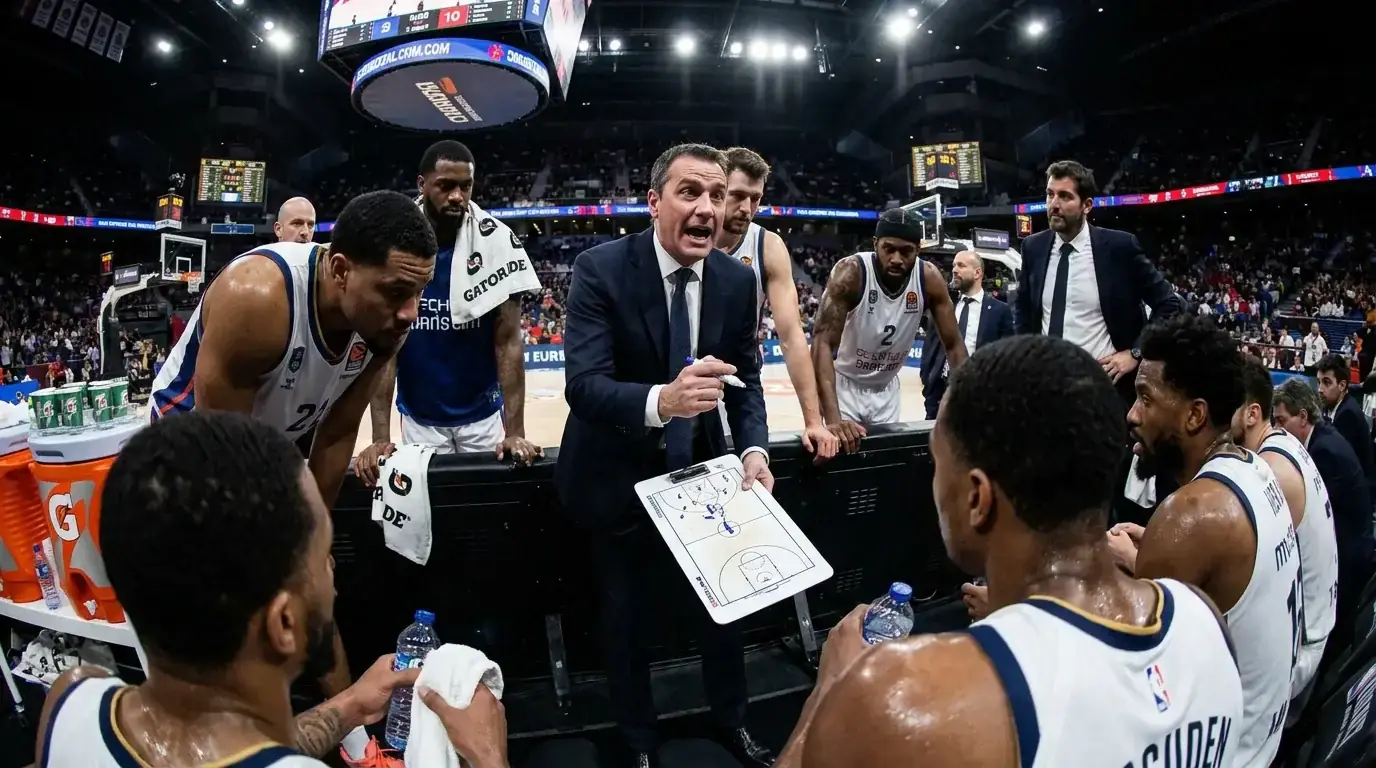
Nobody predicted that team would challenge for home court advantage. They had finished under .500 the previous year, lost their second-best player, and faced low expectations. But their coach implemented a defensive scheme that transformed marginal players into cohesive unit, and I had positioned at 20.00 after watching their preseason adjustments. Coach of the Year rewards recognising system improvements before win totals confirm them.
The Coach of the Year award recognises the NBA’s best coaching performance, creating a market where team improvement, tactical innovation, and exceeding expectations drive outcomes. Understanding what voters prioritise helps navigate this uniquely context-dependent award.
NBA Coach of the Year Voting Criteria
Media members vote for Coach of the Year using ranked ballots. Points accumulate based on placement, with the highest total winning regardless of first-place vote distribution. The voting process mirrors other individual awards despite evaluating collective team performance.
Team improvement drives voting more than absolute success. A coach leading a 45-win team that won 30 games the previous year often defeats one whose 55-win team repeated similar success. Voter perception emphasises change over consistency.
Exceeding expectations matters alongside raw wins. A team projected to miss playoffs that secures home court advantage creates compelling COY narrative. Preseason projections establish baselines that actual results get measured against.
Narrative shapes voter perception beyond pure results. A coach whose system produces aesthetically pleasing basketball or whose personality generates positive media attention receives consideration advantages over equally successful but less visible alternatives.
Improvement vs Sustained Excellence
Improvement narratives win COY awards disproportionately. The “best coach” often differs from the “most improved results” coach, but voters consistently favour the latter. Projecting which teams will exceed expectations identifies candidates.
Sustained excellence rarely wins COY. A coach leading a championship contender to another 55-win season faces voter fatigue despite continued excellence. The award seems to ask “who improved most” rather than “who coached best.”
New coach situations frequently produce COY winners. First-year coaches inheriting talent that previous regimes failed to maximise receive credit for improvement even when roster quality drove results more than coaching changes.
Championship coaches rarely win COY in championship seasons. Voters seem to separate regular season recognition from playoff success expectation. Elite coaches often win COY during building years rather than championship runs.
Team Context and Candidate Pools
Roster health affects COY candidacy. Teams navigating significant injuries while exceeding expectations create coaching narratives. Successfully managing through adversity demonstrates coaching impact beyond simply deploying talented players.
Research shows that only 19% of NBA games remain within 10 points entering the fourth quarter. Coaches whose teams win close games receive credit for late-game execution and tactical adjustments that produce competitive success.
Young team development supports candidacy. Coaches overseeing rookie and sophomore improvement receive credit for player development alongside win accumulation. Improvement narratives extend beyond team record to individual player growth.
Defensive transformation creates particularly compelling candidacies. A team jumping from bottom-ten to top-five defensively suggests scheme implementation that voters attribute directly to coaching rather than player acquisition.
Finding COY Value
Pre-season win total unders at long odds sometimes indicate COY value. Teams projected for modest improvement that dramatically exceed expectations produce COY winners. Identifying which undervalued teams might surge creates parallel betting opportunities.
New coaching hires warrant evaluation. A proven coach joining a talented roster that underperformed might produce immediate improvement. Projecting coaching fit with existing personnel identifies situations where new voices unlock potential.
System changes create candidacy potential. A coach implementing dramatically different schemes that produce success – a defensive transformation, a pace change, a philosophical shift – receives narrative credit that incremental improvement does not generate.
Market timing matters for COY futures. Early-season performance shapes narrative quickly, and a team starting 15-5 after a losing previous season sees their coach’s odds compress dramatically. Positioning before hot starts enables capturing value unavailable after success becomes obvious.
Historical COY Patterns
First-year coaches with new teams win frequently. The combination of fresh perspective and talent unlock creates compelling narratives. Coaches in their second or third year with the same team face higher improvement bars.
Repeat winners are exceptionally rare. Voter fatigue affects COY voting even more than player awards. A coach winning one year faces near-impossible odds the following season regardless of continued excellence.
Eastern versus Western Conference dynamics affect candidacy pools. If one conference features multiple overachieving teams while the other shows expected results, COY candidates cluster geographically.
Playoff performance does not affect regular season award voting but influences future candidacies. A coach whose team collapses in playoffs might face skepticism in subsequent COY consideration despite regular season excellence.
Strategic COY Positioning
COY betting rewards identifying improvement potential rather than coaching quality. The best coaches often lose to coaches of the most improved teams. Accepting this reality sharpens candidate identification.
Connect COY analysis with win total betting. Teams you project to exceed expectations might also produce COY candidates. These parallel markets sometimes offer correlated value from single analytical insights.
Monitor early-season performance carefully. Coaches whose teams start faster than expected see odds compress quickly. Positioning before hot starts enables capturing value unavailable after improvement becomes obvious to markets.
Consider coaching hire histories. How have previous teams performed under this coach’s leadership? Track records provide context for projecting improvement likelihood with new rosters.
Track coaching changes across the league pre-season. New hires inheriting undervalued rosters represent the strongest COY candidate pool historically. Building systematic awareness of coaching situations enables confident early positioning. For comprehensive award market coverage, the complete NBA betting guide integrates COY strategy with broader futures analysis.
