

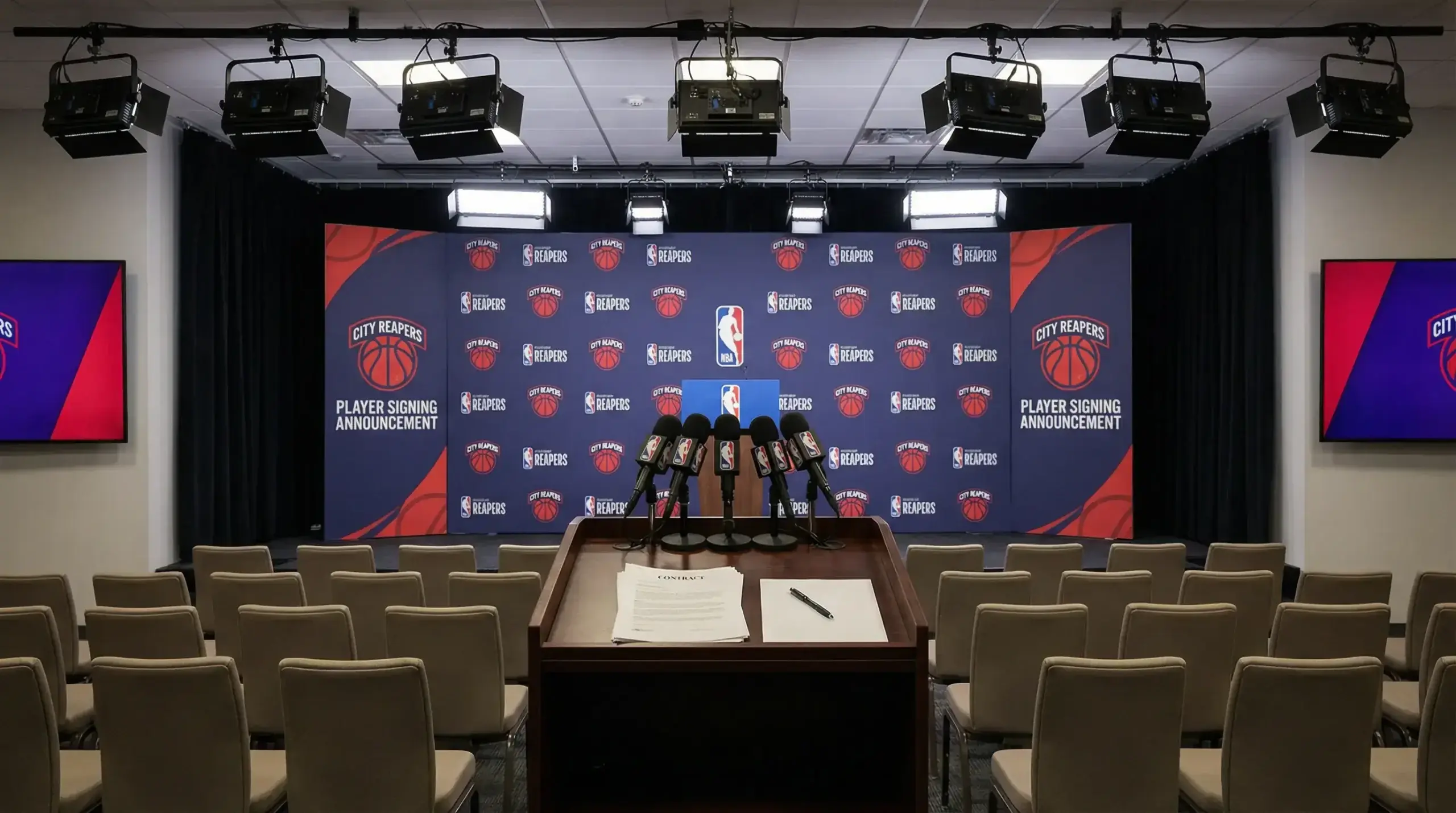
Free agency opens at midnight Eastern, and the first deals report within minutes. By breakfast, championship odds have reshuffled completely as stars change teams and rosters transform overnight. Those July hours create the most volatile futures environment of the basketball calendar – chaos that rewards preparation and punishes hesitation.
NBA free agency restructures the league annually through player movement that reshapes contention windows overnight. Understanding how free agent signings affect futures markets, when to position before news breaks, and how to evaluate roster construction helps navigate the frenetic off-season period profitably.
Free Agency Impact on NBA Championship Futures
Star signings produce immediate and dramatic odds movements. A championship contender adding a max-level free agent might see odds compress from 8.00 to 4.00 within hours of announcement. These rapid adjustments reflect genuine probability changes when elite talent consolidates.
The $76 billion NBA media deal beginning in 2025-26 has increased financial capacity across the league. More teams can compete for top free agents, creating uncertainty about destinations that makes pre-signing futures positioning both valuable and risky.
Teams losing free agents see corresponding odds drifts. An organisation watching their cornerstone depart might see championship odds extend from 12.00 to 35.00 as contention windows close. These negative movements happen as quickly as positive ones when departures become official.
Secondary signings affect odds more modestly but meaningfully. Adding quality rotation players shifts odds incrementally. Cumulative roster construction through multiple signings compounds into significant probability changes even when individual moves produce small adjustments.
Positioning Before Free Agency Opens
Anticipating destinations before official signings captures value unavailable after announcements. Following credible reporters who break free agency news, understanding team cap situations, and monitoring player-team connection rumours helps project likely moves.
Risk accompanies pre-free agency positioning. Anticipated signings fall through regularly. Players change destinations unexpectedly. Building positions that depend on specific outcomes creates meaningful downside when projections prove wrong.
Hedging strategies protect against unexpected outcomes. Taking partial positions before free agency while reserving capital for post-signing adjustments balances opportunity capture against mistake protection.
Cap space analysis identifies which teams can actually sign specific players. Understanding the salary cap, available exceptions, and team financial situations prevents betting on impossible outcomes where teams cannot afford rumoured targets.
Evaluating Roster Construction
Star talent matters most, but roster fit determines championship probability. Three elite scorers who need the ball cannot succeed together regardless of individual ability. Evaluating how acquired players fit existing systems sharpens futures assessment.
Defensive construction separates contenders from pretenders. Teams adding offensive talent without defensive consideration often disappoint in playoffs where defensive intensity escalates. Balanced roster building deserves futures preference over offensive-focused assembly.
Depth signings affect regular season success and playoff rotation flexibility. Teams with quality eighth and ninth players maintain performance through injuries and fatigue better than top-heavy rosters relying on narrow rotations.
Age curves influence multi-year futures value. Young teams improving through free agency might offer better value for later-season championship bets than immediate title wagers. Projection timing matters alongside roster quality assessment.
Free Agent Destination Props
Some bookmakers offer proposition bets on where specific free agents will sign. These markets let you bet directly on player movement rather than inferring futures positions from destination expectations.
Destination props carry extreme uncertainty despite their appeal. Players change their minds, teams adjust offers, and unexpected suitors emerge throughout the negotiation process. High variance makes these markets entertainment-oriented rather than analytically driven.
Information advantages matter enormously in destination props. Bettors with genuine insider knowledge – rare as that is – capture significant value when they know outcomes others are guessing about. Most bettors lack such advantages.
Timing matters for destination props. Odds shift rapidly as rumours strengthen or weaken. Acting early on strong conviction captures better prices but risks being wrong when additional information emerges before signing.
Conference vs Championship Futures
Free agency affects conference futures differently than championship futures. A signing might dramatically improve Eastern Conference title probability while barely moving championship odds if Western Conference competition remains superior.
Conference futures sometimes offer better value during free agency. Markets may overreact to championship implications while underreacting to conference-specific changes. Comparing both market types reveals value discrepancies.
Roster construction standards differ by conference. A team good enough to dominate a weaker conference might struggle against elite competition from the other. Evaluate signings against both conference and league-wide contexts.
Home court advantage in playoffs depends on regular season success that roster construction affects. Teams with championship aspirations need regular season victories to secure advantageous playoff positioning. Free agency depth signings support this path.
