

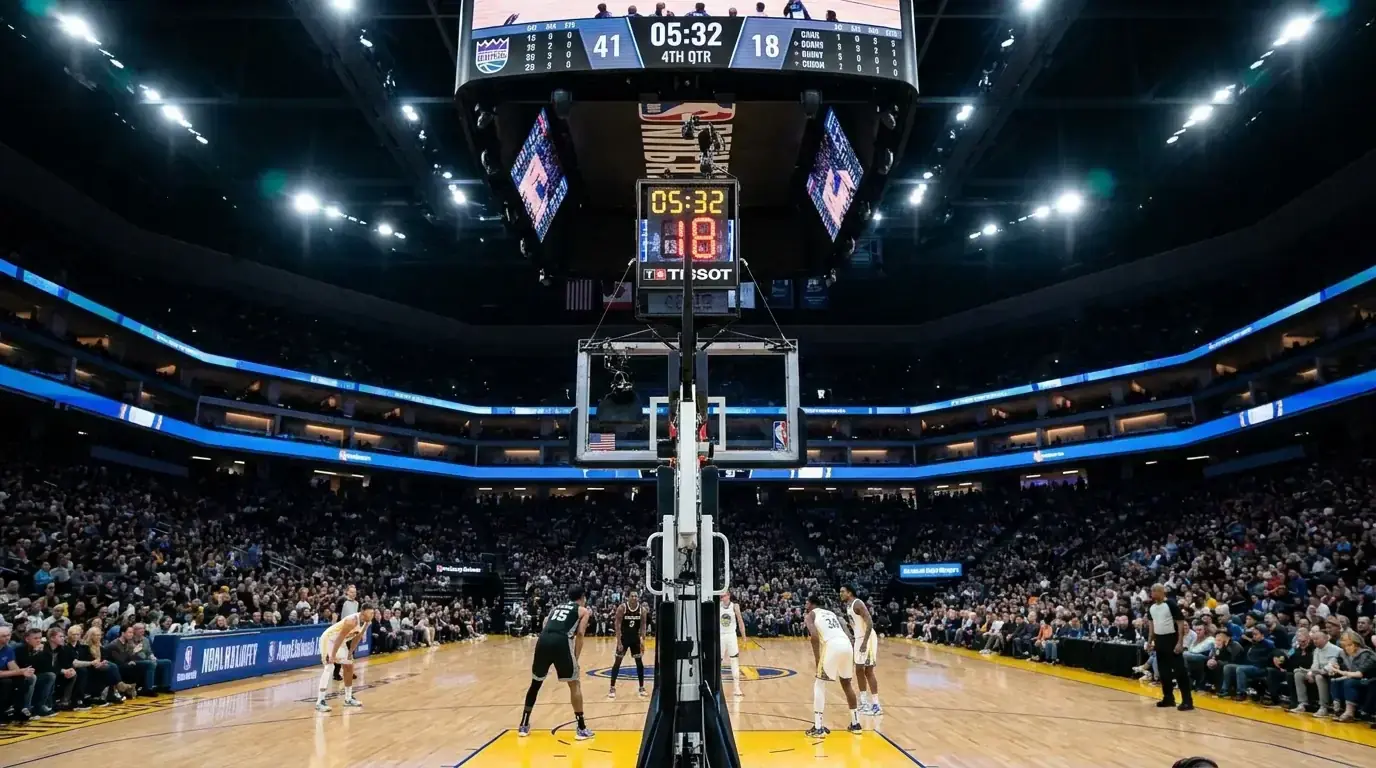
The Clippers came out absolutely flat in the first quarter last March – down 15 before most fans found their seats. I had bet the first quarter spread based on their recent starts, and they covered by halftime but had already buried my Q1 ticket. That loss crystallised why period betting requires different analysis than full-game markets.
Quarter and half betting carves NBA games into discrete segments with independent outcomes. You can be right about how a game ends while completely missing how quarters unfold along the way. These markets reward specialists who study game starts, halftime adjustments, and fourth-quarter dynamics with focused attention.
Betting on specific quarters is a highly effective strategy when you engage in NBA live betting and watch the game momentum shift.
Pricing First Quarter NBA Betting Spreads
Quarter betting offers spreads, moneylines, and totals for each 12-minute period. First quarter spread at -2.5, third quarter total at 55.5, fourth quarter moneyline – all operate as standalone markets independent of full-game results. Your bet settles when that quarter ends regardless of what follows.
Lines typically differ from full-game equivalents divided by four. A team favoured by 8 points overall might see first quarter spreads around -1.5 or -2 rather than straight -2. Bookmakers adjust for quarter-specific dynamics that deviate from full-game projections.
Quarter betting eliminates overtime from consideration entirely. These bets settle at the end of regulation quarters only. If a game enters overtime, quarter bets have already resolved – a structural difference from full-game markets that include extra periods.
Liquidity varies significantly across quarters. First quarter draws the most action and sharpest lines. Second and third quarters see lighter betting, potentially creating softer lines with more edge available. Fourth quarter attracts attention again but often features unpredictable garbage time when outcomes are decided.
First Half and Second Half Bets
Half betting combines two quarters into larger segments. First half spreads and totals mirror full-game structures but settle at halftime. Second half markets often post during halftime breaks, adjusted for first-half results and emerging game dynamics.
Second half lines require live assessment. Bookmakers set these spreads and totals during halftime, incorporating first-half scoring pace, foul trouble, apparent injuries, and coaching adjustments. Bettors with strong halftime reads gain edge over purely algorithmic pricing.
Half totals help isolate pace analysis. If you believe a game slows dramatically after halftime due to defensive adjustments or fatigue, second half unders offer targeted plays without full-game variables clouding the picture.
First half overs tend to attract public money similar to full-game patterns. Sharp bettors sometimes find value in first half unders when both teams prioritise defensive execution early before gambling on offence late. Those tendencies create exploitable biases.
Why Period Bets Exclude Overtime
Period bets settle at regulation segment conclusions because overtime represents a fundamentally different basketball environment. The five-minute extra period features different strategy, desperation levels, and pace than regulation quarters. Including overtime would distort quarter totals unpredictably.
This structure protects bettors from extreme variance. Regulation outcomes remain bounded by consistent 12-minute periods with predictable scoring patterns. Overtime scores swing wildly based on game flow and foul situations that quarter markets cannot reasonably price.
Full-game markets include overtime precisely because entire outcomes hinge on final results. Quarter markets serve different purposes – isolating specific game segments for focused analysis without overtime complications.
First Quarter Betting Trends
Opening quarters reveal team preparation and early execution. Coaches script initial offensive possessions, making first quarters more predictable than later periods when adjustments respond to unfolding game dynamics. That predictability creates analytical edge for bettors studying preparation patterns and team tendencies.
Some teams consistently start fast while others build into games. Tracking first quarter spread records across season samples identifies tendencies the market sometimes underweights. A team covering first quarter spreads 60% of the time carries meaningful edge if lines do not reflect that history accurately.
Fatigue from back-to-back games shows most clearly in first quarters. Teams playing consecutive nights often start sluggishly before finding rhythm. Research indicates fatigue impacts performance by 1-3 points overall – that impact concentrates heavily in early game segments before adrenaline and competitive intensity compensate.
Home teams tend to start stronger with crowd energy and familiar surroundings. Road teams sometimes need minutes to adjust to arena atmosphere and travel effects. These patterns support home team first quarter spreads more than full-game equivalents might suggest based purely on point differential analysis.
Coaching matchups matter intensely in first quarters. Teams facing unfamiliar opponents or new schemes often struggle early before film study and in-game adjustment correct initial confusion. Betting against teams in first meetings with new coaching staffs can identify first quarter edges invisible in season-long statistics.
Fourth Quarter Betting Opportunities
Fourth quarters present unique challenges because game context heavily influences outcomes. Blowouts produce meaningless garbage time where starters rest and benches play extended minutes. Competitive games see intensity spikes and strategic fouling that distort normal scoring patterns.
Analysis of thousands of games reveals that only 19% remain within 10 points entering the fourth quarter. That minority of close games creates intense fourth quarters while the majority feature context-dependent scoring unrelated to team quality. Betting fourth quarters requires filtering for likely competitive games.
Pace typically slows in fourth quarters of close games. Leading teams protect possessions while trailing teams become more selective with shot selection before desperation fouling late. Fourth quarter unders make sense in projected close games between defensively competent teams.
When games appear decided, fourth quarter scoring becomes unpredictable. Bench players facing each other produce volatile results that basic analysis cannot anticipate. Avoiding fourth quarter bets in likely blowouts protects against variance you cannot meaningfully handicap.
Integrating Period Bets Strategically
Quarter and half betting fits best as supplementary rather than primary strategy. The markets offer value when you hold strong views about specific game segments without confidence in full-game outcomes. They also enable hedging positions as games unfold in unexpected directions.
Get real-time updates and sharp lines at Bet NBA Online to secure your in-game wagers.
Start by tracking first quarter results for teams you follow closely. Build databases of first half scoring tendencies, halftime adjustment patterns, and fourth quarter performance in competitive versus lopsided games. That groundwork supports informed period betting rather than random segment gambling.
Consider period betting when full-game lines seem efficient but segment-specific factors create opportunities. A team might be appropriately priced overall while their slow-starting tendencies create first quarter value on the other side. Segmented analysis often reveals what aggregated statistics obscure.
For understanding how period betting connects with in-game wagering, NBA live betting strategies cover real-time market dynamics that influence second half and fourth quarter opportunities as games progress.
