

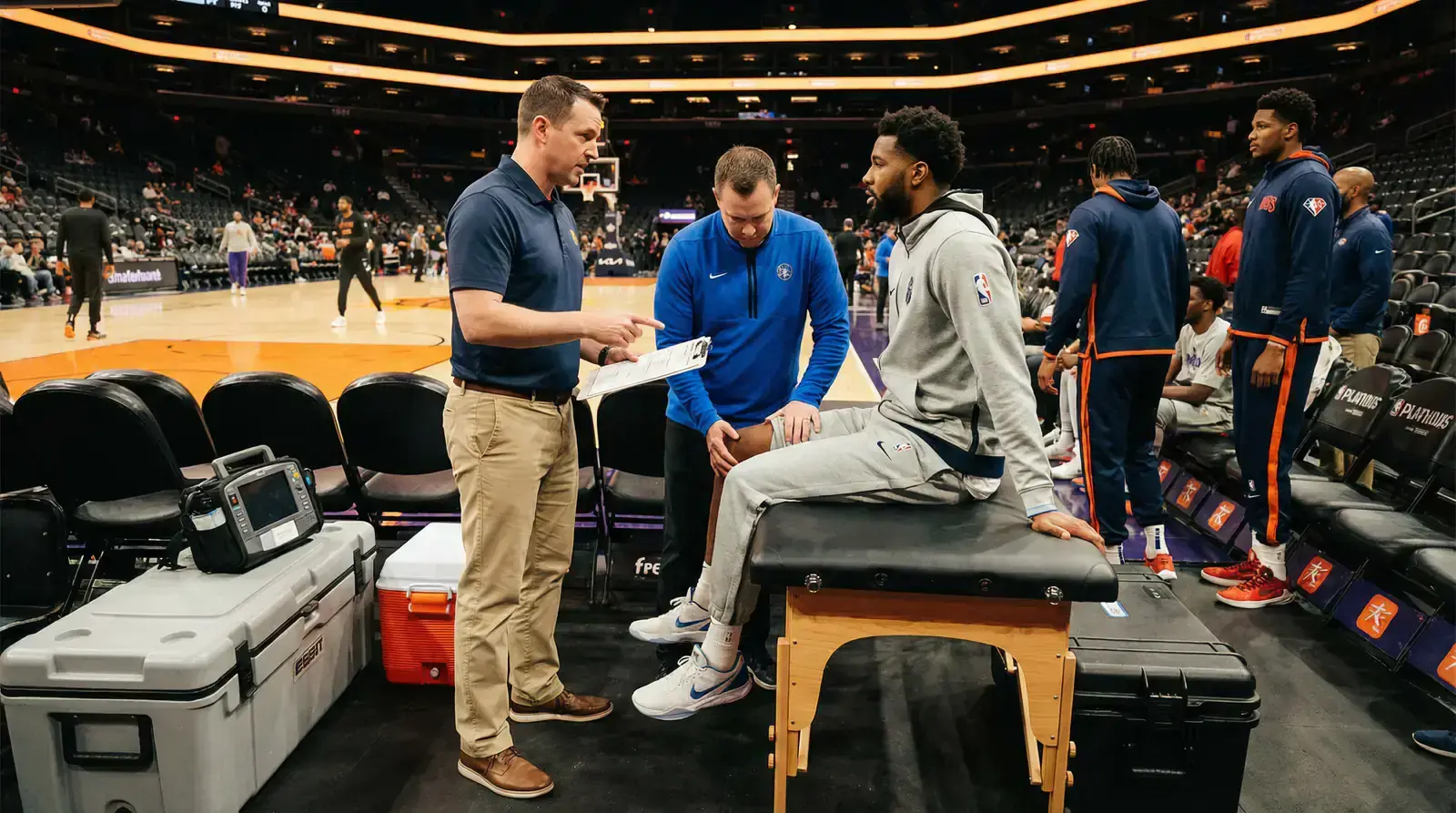
The notification arrived 47 minutes before tip-off – their starting point guard upgraded from questionable to available. Lines that had adjusted for his absence whipsawed back, but not completely. That incomplete correction created value for bettors monitoring injury updates in real time. In the information age, injury report literacy separates winners from losers.
NBA injury reports drive line movements more dramatically than almost any other factor. Understanding report timing, designation meanings, and market reactions helps you position advantageously when player availability changes. The bettors who profit from injury news are those who process it faster and more accurately than the market.
Evaluating NBA Injury Reports for Spread Bets
The NBA requires teams to submit injury reports by specific deadlines, creating predictable information windows. Reports must be filed by 5pm Eastern the day before games, with updates permitted as player conditions change. These structured reporting requirements create opportunities for prepared bettors.
“Out” means the player will not play. This definitive designation triggers immediate line adjustments since there is no ambiguity about availability. Markets price in absence quickly once “out” appears on official reports.
“Doubtful” indicates the player is unlikely to play but has not been definitively ruled out. These designations typically convert to “out” but occasionally see surprise upgrades. Markets partially price doubtful players as absent while maintaining some probability of participation.
“Questionable” creates maximum uncertainty. Players might play or sit depending on game-day evaluation. Lines often hold steady with questionable designations until clearer information emerges closer to tip-off. The uncertainty window creates trading opportunities.
“Probable” suggests the player will likely participate despite some concern. These designations rarely result in absences, so markets treat probable players as essentially available. The designation acknowledges minor issues without meaningful availability doubt.
How Injuries Move Lines
Star player absences trigger the largest movements. When a team loses a 25-point scorer, spreads typically shift 4-6 points depending on replacement quality and opponent context. These adjustments happen within minutes of official announcements at efficient bookmakers.
Research confirms fatigue affects team performance by 1-3 points in back-to-back situations. Injury absences compound with fatigue effects when teams lose key players during compressed schedule stretches. Multiple factors combining deserve additional spread consideration.
Role player injuries produce smaller but meaningful movements. Losing a starting centre or primary defender might shift lines 1-2 points. These adjustments sometimes lag star player movements, creating brief value windows before full market correction.
Cumulative injuries affect lines more than individual absences suggest. A team missing three rotation players faces challenges exceeding the sum of individual impacts. Shortened rotations, unfamiliar lineups, and increased fatigue for remaining players compound problems.
Timing Your Bets Around Injury News
Early betting before injury clarity provides original lines that may not reflect eventual availability. If you expect a questionable player to sit, betting against them early captures value before official absence confirmation moves lines.
Late betting after injury confirmation provides certainty but at adjusted prices. You know exactly who plays but face lines already reflecting that information. The trade-off between certainty and price determines optimal timing for your situation.
Following reliable reporters provides earlier information than official reports. Beat writers with team access often signal availability changes before formal announcements. Building a network of trusted sources creates informational advantages.
Game-day monitoring matters most for questionable players. Morning shootaround participation, warmup intensity, and last-minute designations all provide signals about availability. Active monitoring during these windows identifies value before markets fully adjust.
Finding Value When Stars Return
Return games often see market overreaction to star availability. A player returning from injury might face minutes restrictions, conditioning limitations, or rust that reduces immediate impact. Lines sometimes overcorrect for returns, creating value on the other side.
Minute restrictions significantly affect player props. A star “available” but limited to 24 minutes cannot produce the statistics their full-minute role generates. Prop markets sometimes lag in adjusting to restriction announcements.
Team rhythm disruption follows extended absences. Lineups that developed chemistry without the returning star need time to reintegrate. The first few games back sometimes show worse team performance despite improved individual talent availability.
Historical return patterns inform expectations. How has this player performed in previous return games? Do they typically start slowly or hit the ground running? Individual tendencies reveal whether return games warrant backing or fading the returning star.
Tracking Multiple Injuries
Cumulative injury monitoring requires systematic approaches. Tracking one team’s injuries is manageable; tracking all 30 teams demands organised processes that casual bettors rarely implement.
Spreadsheets or databases tracking current injuries by team enable quick reference when analysing games. Noting injury designation, days missed, and expected return timelines creates accessible information for rapid decision-making.
The UK sports betting market continues growing with a projected CAGR of 11.4% through 2030. That growth attracts more sophisticated bettors competing on information advantages including injury tracking. Systematic approaches become more valuable as competition intensifies.
Prioritise tracking injuries for teams you bet frequently. Deep knowledge of specific rosters enables faster reaction when their injury news breaks. Specialisation produces better results than surface-level monitoring across the entire league.
Building Injury Awareness
Injury report literacy develops through consistent attention to announcements and market reactions. Observing how lines move when specific players are ruled out builds intuition about impact magnitude that statistics alone cannot convey.
Create pre-game routines that include injury report review. Before analysing any matchup, check current availability for both teams. This habit prevents embarrassing oversights when key absences affect games you intended to bet.
Build relationships with reliable injury information sources. Beat reporters, team insiders, and official team accounts provide varying levels of speed and accuracy. Knowing which sources to trust enables faster reaction when news breaks.
Track how specific player absences affect their teams historically. Some stars are more replaceable than others due to roster depth or system design. Understanding team-specific injury impact improves line movement projection accuracy.
Combine injury awareness with other analytical factors rather than treating health information in isolation. Injuries matter, but opponent quality, scheduling advantages, and matchup dynamics still drive outcomes. The comprehensive NBA betting guide covers how injury analysis integrates with complete handicapping approaches.
