

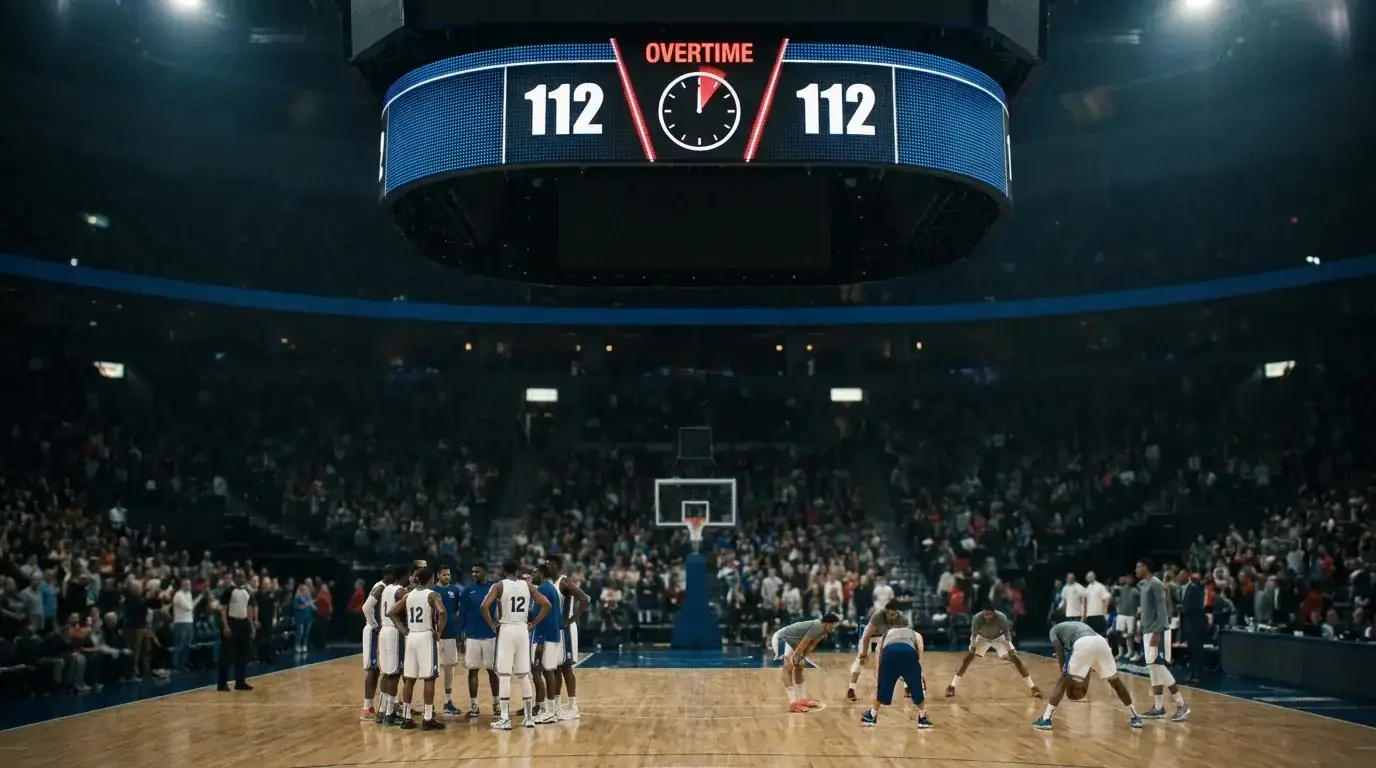
The bet looked dead. Warriors down four with 30 seconds left, my over 226.5 needing a miracle. Then Curry hit a three, forced overtime, and both teams combined for 27 extra points. That 253 final turned disaster into profit – but only because I understood overtime counted toward my total. Many bettors learn this lesson the expensive way.
Overtime rules create genuine confusion because different markets treat extra periods differently. Some bets include OT while others exclude it entirely. Knowing which markets incorporate overtime and which settle at regulation prevents costly misunderstandings and enables strategic positioning when games head toward potential extra periods.
NBA Betting Markets That Include Overtime
Full-game spreads include overtime in virtually every case. If you bet the Celtics -4.5 and they win by 3 in regulation but by 7 after overtime, your spread bet wins. The final score after all periods determines spread outcomes regardless of how many overtimes occur.
Game totals include overtime scoring as well. That 226.5 over/under incorporates every point from tip-off through the final buzzer of whatever period ends the game. Multiple overtimes can push totals 30-40 points beyond regulation projections, dramatically affecting outcomes.
Moneyline bets obviously include overtime since they simply ask who wins. A team trailing by 10 entering the fourth quarter might win in overtime, rewarding patient moneyline bettors who backed the eventual winner despite regulation struggles.
Most player props include overtime statistics. If you bet a player over 25.5 points and they score 24 through regulation but hit 28 after overtime contributions, your bet wins. Those extra minutes create additional scoring opportunities that inflate statistical totals.
Futures and season-long bets naturally include overtime since they track cumulative results across entire seasons where overtime outcomes factor into standings, statistics, and award races just like regulation results.
Markets That Exclude Overtime
Quarter bets settle at regulation quarter conclusions. First through fourth quarter spreads and totals resolve after their respective 12-minute periods regardless of eventual overtime. Your fourth quarter under bet settles before any extra periods begin.
Half bets similarly exclude overtime. First half markets settle at halftime, and second half markets settle after the fourth quarter. Overtime exists outside these defined periods and does not affect their outcomes.
Some bookmakers offer regulation-only markets specifically for bettors wanting to exclude overtime variance. These markets typically carry slightly different pricing than standard versions and provide certainty about when bets settle.
Race-to-points markets usually specify regulation only. A “first to 100 points” bet typically settles at regulation end if neither team reaches the threshold, rather than continuing through overtime. Always verify specific rules for these prop-style markets.
Player Props and Overtime
Player prop inclusion of overtime significantly affects strategy. Research shows that 19% of NBA games remain within 10 points entering the fourth quarter – those close games most likely produce overtime. When betting player unders, close game scenarios create risk because overtime extends statistical accumulation opportunities.
Star players particularly benefit from overtime minutes. While rotation players might sit during extra periods, primary scorers and playmakers typically log full overtime minutes. Their props become more likely to hit overs when games extend beyond regulation.
Fatigue effects in overtime vary by player. Younger stars often maintain production through extra periods while veterans sometimes struggle with extended minutes. Understanding individual player overtime tendencies informs prop selection on close-game nights.
Some bookmakers offer “regulation only” player props at adjusted odds. These markets provide insurance against overtime variance for bettors confident in regulation performance but concerned about extra period unpredictability.
How OT Rules Affect Strategy
Identifying overtime-likely games helps position bets strategically. Evenly matched teams with strong defences often produce overtime – their games grind toward close finishes where single possessions decide outcomes. Betting totals overs in these matchups captures overtime upside.
Fatigue from back-to-back situations affects overtime probability and performance. Research indicates fatigue impacts teams by 1-3 points, and those exhausted legs struggle more in overtime than fresh opponents. Factor rest advantages into close-game projections when assessing overtime likelihood.
Live betting during tight fourth quarters requires overtime awareness. If you are considering a totals position and the game heads toward a close finish, remember that overtime dramatically boosts scoring totals. That context should influence live total decisions as regulation winds down.
Player prop unders carry overtime risk in close games. A player sitting at 24 points with your under 25.5 bet looks safe entering the fourth quarter of a blowout but becomes vulnerable if the game tightens and overtime materialises. Those extra five minutes create statistical accumulation opportunities.
Consider hedging positions when overtime appears likely. If your under looks dead without overtime but salvageable with regulation ending, live betting options might protect your original stake. The cost of hedging versus the probability of overtime determines whether protection makes mathematical sense.
Checking Your Bookmaker’s Rules
Never assume overtime rules match across bookmakers. While most follow standard conventions, exceptions exist. Some books offer the same market with different overtime treatments at different prices. Reading terms and conditions prevents costly assumptions.
New market types sometimes carry non-standard overtime rules. When bookmakers introduce novel props or betting options, overtime treatment might differ from established markets. Verify rules specifically for unfamiliar bet types before committing stakes.
Customer support can clarify ambiguous rules. If betting terms seem unclear, asking directly prevents disputes after games conclude. Bookmakers prefer answering questions beforehand to resolving complaints afterward.
Keep screenshots of rules when placing significant bets on overtime-sensitive markets. Rules occasionally update, and documentation protects your position if disputes arise about which version applied when you placed your wager.
