

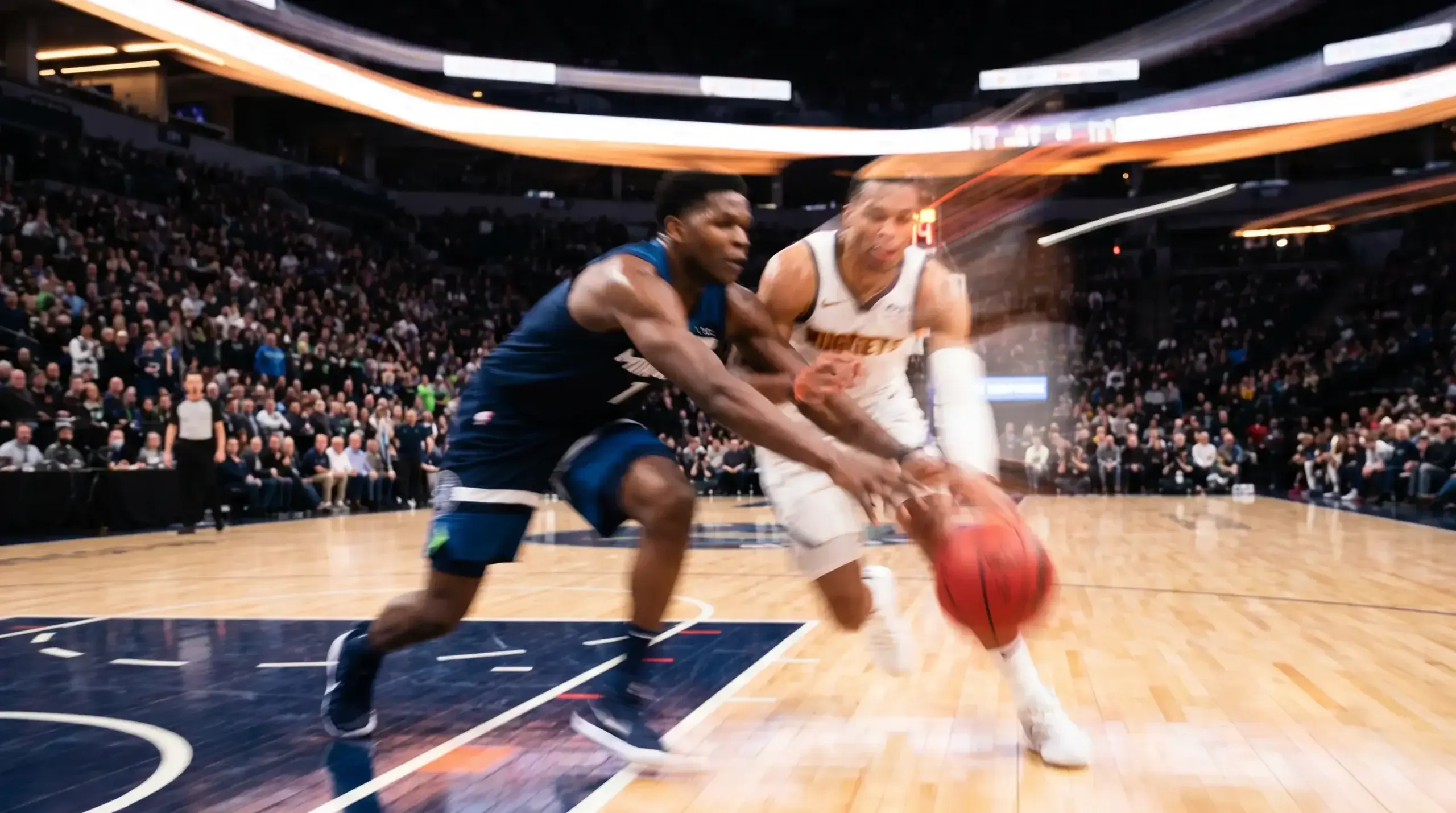
Third quarter, Lakers down 14, and my phone buzzes with a notification: Lakers live spread now +6.5 at 2.10. Ten minutes earlier, they were -3 favourites. The market had swung wildly based on twelve minutes of basketball that I had watched unfold in real time – basketball that told a different story than the scoreboard suggested. The Lakers were getting clean looks that were not falling. Their defence had tightened. The Suns looked gassed from a fast start. I took the +6.5. Lakers won by 3.
NBA live betting UK markets have exploded over the past five years, and for good reason. Basketball’s structure – constant scoring, frequent stoppages, four quarters of distinct action – creates perfect conditions for in-play wagering. Every timeout, every quarter break, every free throw sequence gives bookmakers time to update lines and bettors time to react. The game state evolves continuously, and sharp observers can spot when odds lag behind reality.
But that same structure creates dangers. The pace of live betting can overwhelm discipline. A bad beat in the second quarter tempts you to chase in the third. An exciting finish hooks you into placing bets you never planned. The immediacy that makes NBA live betting thrilling is the same immediacy that makes it risky if approached carelessly.
In my years analysing NBA markets, live betting has become an increasingly central part of my approach – but with strict guardrails. I watch games I plan to bet live, I set predetermined entry points, and I walk away when my limits are reached. This guide shares both the opportunities and the discipline required to pursue them responsibly.
Top Live NBA Betting Markets in the UK
The first time I opened a live betting interface during an NBA game, I was overwhelmed. Dozens of markets updating every few seconds, odds flashing green and red, timers counting down to the next suspension. It looked like a stock trading floor. Understanding what is available – and what is actually worth betting – took time to learn.
Live moneyline remains the simplest market. Who will win the game from this point forward? Odds adjust based on the current score, time remaining, and momentum indicators the bookmaker’s algorithms assess. A team down 10 with six minutes left might be +350 to win – long odds reflecting the difficulty of their situation, but not impossible given basketball’s scoring pace.
Live spread betting works identically to pre-game spreads but with constantly adjusting numbers. The spread might have opened at -5.5 for the home team, but after they fall behind by 8, the live spread might shift to +3.5. You are betting on whether they will cover from this point forward, not from tip-off. This creates opportunities when you believe the current margin misrepresents how the rest of the game will unfold.
Live totals let you bet on combined scoring for the remainder of the game. If the first half saw 115 combined points, the live total for the game might sit at 225.5. Bookmakers project second-half scoring based on first-half pace, but pace often changes as teams adjust defensively or fatigue sets in. Live totals also exist for individual quarters – you can bet on fourth quarter scoring specifically if you have a read on how both teams finish games.
Quarter and half markets settle independently from full-game outcomes. A second-half spread of -2.5 means you are betting only on the final 24 minutes. These isolated period bets appeal to bettors who see specific situational edges – a team that typically dominates third quarters, for instance, or one that fades in the fourth.
Next team to score and next player to score markets offer rapid-fire betting opportunities during gameplay. These are high-variance propositions with entertainment value but limited analytical edge. The ball could go to anyone on any given possession. I treat these as occasional fun bets rather than serious investments.
Player props also update live during games. If a scorer has 15 points at halftime against a line of 24.5, the live line might adjust to 10.5 for the second half. Injuries and foul trouble during games create prop opportunities that did not exist pre-game – a backup centre suddenly playing starters’ minutes has different prop value than his morning line reflected.
How NBA Live Odds Change During Games
I used to think live odds simply tracked the scoreboard – team goes up by 8, their odds shorten proportionally. Then I watched a game where the Nuggets built a 12-point lead while their live moneyline actually lengthened. The algorithms were seeing something I initially missed: their star player had picked up his fourth foul, their opponent was dominating the glass, and the lead felt fragile despite the numbers. The market was pricing in what was likely to happen, not just what had happened.
Modern live betting algorithms incorporate dozens of variables beyond the score. Time remaining is obvious – a 10-point lead with two minutes left is far safer than the same lead with twenty minutes left. But the models also track possession, foul count, timeout availability, player performance trends, and momentum indicators derived from recent sequences of play.
Scoring runs trigger rapid line movement. A team that rattles off an 8-0 run will see their odds shorten dramatically even if the overall score has not changed much. The algorithms detect that something has shifted – the team is hot, the opponent is struggling – and adjust before the scoreboard fully reflects the change. Conversely, a team maintaining a lead through even exchanges will see more modest line movement.
Injury timeouts and player departures cause immediate recalculation. When a star player goes to the locker room, lines can swing several points within seconds. The market prices in the expected impact of their absence for the remainder of the game. Sometimes this creates overreaction opportunities if the injury looks worse than it is, but often the algorithms are surprisingly accurate in assessing player value.
Lead changes are not weighted equally. Going from down 3 to up 1 on a single possession shifts momentum and psychology in ways the algorithms attempt to quantify. A team that has fought back from down 10 to tied carries different implications than one that has slowly surrendered a 10-point lead. The direction of travel matters alongside the current position.
Quarter breaks and halftime allow bookmakers to fully reset their models. The half-time line often differs from what pre-game projections would have suggested because actual performance data now informs the calculation. These breaks are when I do my most careful live betting analysis – I have time to think rather than react.
Fourth Quarter Betting: Research-Backed Insights
The fourth quarter is where NBA games are decided, but it is also where they become most unpredictable. I spent months studying closing quarters, building datasets, looking for patterns. What I found challenged assumptions I had held for years – and fundamentally changed how I approach late-game live betting.
Academic research analysing over 2,295 games across a decade found that only 19% of NBA games remain within 10 points entering the fourth quarter. That means roughly four out of five games are effectively decided before the final period begins. For those games, fourth-quarter betting often offers little value – the trailing team is either going to foul and extend the game artificially or concede gracefully. Neither scenario rewards sophisticated analysis.
But that remaining 19% – the genuinely close games – is where the interesting dynamics emerge. These games see distinct changes in pace and efficiency. Teams slow down, play more deliberately, run fewer possessions per minute. The frenetic pace of the first three quarters gives way to half-court execution and increased defensive intensity. Fourth quarters in close games average fewer points than other quarters precisely because the stakes tighten the play.
Fatigue compounds these effects. Players who have played heavy minutes through three quarters show measurable performance decline. Research shows back-to-back games affect team performance by 1 to 3 points on average, and similar fatigue effects appear within individual games. Teams playing their second game in two nights often fade in the fourth quarter specifically, even if they kept pace earlier. Fresher teams tend to close better.
What this means for live betting is nuanced. Fourth quarter unders often hold value in close games because pace decreases and efficiency drops. But the correlation is not absolute – some games see desperate scoring bursts in final minutes. Teams trailing need to score quickly, which sometimes inflates fourth quarter totals despite the overall pace reduction.
For spread betting, the implications depend on which team is fresher and which relies more heavily on athleticism versus execution. A team with superior conditioning and half-court offence is more likely to close out close games. A team dependent on transition and energy often fades when the game slows down. Understanding these tendencies – team by team, player by player – gives you an edge when evaluating fourth quarter live spreads.
I have built this research into my live betting process. Before fourth quarters in close games, I assess fatigue, pace tendencies, and historical closing performance for both teams. Then I watch the first few possessions of the quarter to see which team looks sharper before placing any bets.
Reading Game Momentum for Live Bets
Momentum in basketball is real, measurable, and frequently mispriced. Research tracking teams with four or more consecutive wins shows success rates around 56.5% when backing them – the hot hand extends to team-level performance. Within individual games, similar dynamics play out on compressed timescales. Learning to read these momentum shifts gives live bettors their primary edge.
Scoring runs are the most visible momentum indicator. An 8-0 or 10-2 burst signals something has changed – the team on the run is executing, the opponent is forcing shots or turning the ball over. Live algorithms detect these runs and adjust odds, but human observers can often identify why the run is happening and whether it is sustainable. A run driven by unsustainable three-point shooting will likely regress. A run driven by defensive pressure and transition baskets might continue.
Timeout patterns reveal coaching assessments of momentum. A coach calling timeout to stop an opponent’s run is acknowledging that something has shifted. Sometimes the timeout resets the situation; sometimes the team comes out of the timeout and continues struggling. Watching how teams respond to timeouts – both offensively and defensively – tells you whether the momentum shift is being addressed or compounded.
Substitution changes affect momentum in less obvious ways. A team inserting their top defender to guard a hot scorer changes the dynamic. A team going to their bench because starters are in foul trouble introduces uncertainty. Fresh legs from the bench can spark runs; tired starters can extend them. The who-is-on-the-court question matters as much as the score.
Foul trouble is perhaps the most underrated momentum factor. A team playing without their best defender because he has four fouls behaves differently. They cannot be as aggressive, they give up easier baskets, and their entire defensive scheme adjusts. Similarly, a team hunting an opponent’s foul-troubled star changes their offensive approach. These adjustments are not always fully priced into live lines.
I watch games I bet live rather than just tracking scores. The eye test catches things algorithms miss – a player nursing an undisclosed injury, a coach visibly frustrated with officials, a shooter whose form looks off even when shots are falling. These qualitative factors inform my momentum reads and often represent the edge that justifies live betting over simply taking pre-game lines.
Cash Out and Partial Cash Out in NBA Live Betting
Fourth quarter, my team up by 12, spread bet looking comfortable at -6.5. Cash out offer: 85% of potential profit. Let it ride or lock in the gain? I have been on both sides of this decision – cashed out only to watch an easy cover, held firm only to see a late collapse. There is no universally correct answer, but there is a framework for thinking about it.
Cash out offers represent the bookmaker’s assessment of your bet’s current value. If you bet £100 to win £91 and the cash out offer is £75 profit, the bookmaker is effectively saying your bet now has roughly 82% chance of winning at current odds. They build margin into these offers – you are always getting slightly worse than fair value when cashing out. The convenience has a price.
The mathematical argument against frequent cash outs is straightforward. Every time you cash out, you accept worse-than-fair value. Over hundreds of bets, this margin erosion compounds. The disciplined approach is to let bets run, accepting variance as the cost of capturing full value. Emotional comfort from cashing out winning positions costs you money in the long run.
But that mathematical argument ignores human psychology. A bird in hand genuinely does feel better than two in the bush when your heart rate spikes watching a fourth-quarter lead evaporate. If cashing out occasionally preserves your mental wellbeing and prevents tilt-driven mistakes in subsequent bets, the cost might be worth paying. Self-awareness matters here – know your own tendencies.
Partial cash out splits the difference. You might lock in 50% of your bet’s current value while letting 50% ride. This hedges your position without completely surrendering your stake in the outcome. The maths still favour letting everything ride, but partial cash out can be a reasonable compromise for bettors who find the swings psychologically difficult.
My personal rule: I almost never cash out pre-game bets during live action. I made my assessment before tip-off; nothing has fundamentally changed except the score at this moment. Where I do consider cash out is on live bets that I placed based on information that has since shifted – if I bet a team live because their star looked healthy and he then aggravated an injury, cashing out reflects updated information rather than mere emotional reaction.
Risks and Responsible Live Betting
I need to be direct about something: live betting carries specific risks that exceed pre-game wagering. The pace, the immediacy, the emotional engagement – these features that make live betting exciting are precisely what make it dangerous for punters susceptible to problem gambling. Roughly 340,000 UK adults meet clinical criteria for gambling disorder, and live betting’s rapid-fire nature can accelerate problematic patterns.
Zoë Osmond from GambleAware has noted that particular types of gambling lead to increased chances of experiencing gambling harm, with corrosive effects on lives, finances, careers, and relationships. Live betting qualifies as one of those higher-risk types. The opportunity to bet continuously throughout a two-hour game creates exposure that a single pre-game wager does not. Losses can compound quickly, and the temptation to chase within the same game is immediate.
The signs of problematic live betting are often visible before the damage becomes severe. Betting increasingly frequently during games. Increasing stakes after losses to chase recovery. Feeling unable to stop betting even when you want to. Lying about how much you are betting or losing. Borrowing money to fund live bets. If any of these describe your experience, please stop and seek support – GambleAware and the National Gambling Helpline offer confidential assistance.
For punters who can engage responsibly, guardrails help maintain control. Set firm session limits before games start – both monetary and bet count. Decide in advance which games you will bet live and which you will simply watch. Never bet live when tired, intoxicated, or emotionally compromised. Take breaks between bets to disrupt reactive patterns.
I take a month off from live betting every season. Completely. No exceptions. The break resets my relationship with the markets and confirms that I am betting by choice rather than compulsion. When I return, I am sharper and more disciplined. If the thought of a month without live betting feels impossible, that reaction itself is worth examining.
The goal is entertainment supplemented by analytical engagement – not dependency or harm. Live betting can be part of a healthy sports fandom for those who approach it with awareness and limits. But the risks deserve acknowledgement, not minimisation.
Practical Tips for NBA Live Betting
Pre-game research remains essential even when betting live. I never bet a game live without having reviewed it beforehand – team form, injury status, matchup dynamics, situational factors. The live market offers tactical opportunities, but those opportunities only matter if I understand what I am looking at. Wandering into a game cold and betting based on the current score is gambling, not betting.
Watching the game makes a difference. Not just tracking the score on an app – actually watching. The nuances that inform good live bets are visual: a shooter’s form, a defender’s positioning, a player’s energy level. If I cannot watch a game, I generally do not bet it live. The information disadvantage is too significant.
Pre-determined entry points prevent reactive betting. Before tip-off, I might note: “If the Celtics fall behind by 8+ in the first half, I will look at them live.” This framing means I am waiting for specific situations rather than continuously evaluating every market update. It reduces the cognitive load and prevents chasing.
Quarter breaks and halftime are your analytical windows. The constant flow of live betting can overwhelm careful thinking. But when the clock stops, you have time. I do my best live betting analysis during breaks – reviewing what I have seen, comparing it to my pre-game assessment, and deciding whether any opportunities meet my criteria.
Bet sizing should be more conservative for live bets than pre-game. The variance is higher, the information is noisier, and the emotional engagement is greater. I cap my live bets at half the size of my standard pre-game bets. This discipline protects my bankroll while still allowing meaningful engagement.
Accept that you will miss opportunities. A line might flash that looks perfect, and by the time you place the bet, it has moved. That is frustrating but inevitable. Do not compound the frustration by then betting a worse line or a different game. Missed opportunities are not losses – they are simply bets you did not make.
The best live bettors combine pre-game preparation, real-time observation, and disciplined execution. Lacking any one of these elements undermines the others.
Making Live Betting Work for You
Live betting will not make you rich. Most punters lose money, and the faster pace of live markets accelerates that reality for those without discipline. But for bettors who approach it correctly – with preparation, observation, and strict guardrails – live betting offers genuine analytical opportunities that pre-game markets do not.
The edge comes from seeing what algorithms miss. Recognising that a team’s 10-point lead is fragile before the line reflects it. Understanding that a key player’s body language suggests injury before he leaves the game. Noticing that fatigue is setting in for one team while the other looks fresh. These observations require actually watching basketball, not just following scores.
Start small if you are new to live betting. Pick one game per week that you plan to watch fully. Make one or two predetermined entry points. See how your observations match up against market movements. Build your skills before increasing stakes or frequency.
The complete NBA betting guide covers broader market fundamentals that inform live betting decisions. Understanding spreads, totals, and game dynamics at a foundational level makes your live observations more actionable. Live betting is advanced application of concepts that start simpler.
Above all, maintain perspective. Live betting is entertainment enhanced by analysis – not a career, not a financial strategy, not an identity. The games matter. Your wellbeing matters more. Bet what you can afford, within limits you set, while keeping gambling in its proper place alongside other pursuits. The punters who thrive long-term are those who enjoy the process without becoming consumed by it.
